
The Ultimate Guide to Medicare in 2026

If you’re turning 65 or becoming eligible for Medicare in 2026, understanding how Medicare works is one of the most important financial and healthcare decisions you’ll make. While Medicare provides valuable health insurance coverage for millions of Americans, navigating the different parts, enrollment periods, and plan options can feel overwhelming—especially if it’s your first time enrolling.
Many people assume Medicare covers all healthcare expenses, only to discover later that certain services, prescriptions, or out-of-pocket costs aren’t included. Others miss important enrollment deadlines and face lifelong penalties that could have been avoided with the right information.
The good news is that Medicare doesn’t have to be confusing.
This comprehensive Medicare guide explains everything you need to know about Medicare in 2026, including who qualifies, what each part covers, how enrollment works, and what to consider when comparing Original Medicare, Medicare Advantage, and Medicare Supplement plans. Whether you’re preparing for retirement, helping a family member understand their options, or simply planning ahead, this guide will help you make informed decisions with confidence.
Table of Contents
- What Is Medicare?
- Who Is Eligible for Medicare?
- Understanding Medicare Part A
- Understanding Medicare Part B
- Understanding Medicare Part C (Medicare Advantage)
- Understanding Medicare Part D
- Medicare Supplement (Medigap)
- Medicare Advantage vs. Medicare Supplement
- Medicare Enrollment Periods
- What Is IRMAA?
- Medicare Costs in 2026
- Late Enrollment Penalties
- Common Medicare Mistakes
- Frequently Asked Questions
- Final Thoughts
What Is Medicare?
Medicare is the federal health insurance program designed primarily for individuals age 65 and older, although younger people with certain disabilities or qualifying medical conditions may also be eligible.
Established in 1965, Medicare helps millions of Americans access affordable healthcare by covering a wide range of medical services, including hospital stays, physician visits, preventive care, and prescription medications. Today, it remains one of the largest and most important healthcare programs in the United States. Unlike traditional employer-sponsored health insurance, Medicare is divided into several different parts, each serving a unique purpose. Understanding how these parts work together is essential for choosing coverage that meets your healthcare needs and budget.
At its core, Medicare consists of:
- Part A – Hospital Insurance
- Part B – Medical Insurance
- Part C – Medicare Advantage Plans
- Part D – Prescription Drug Coverage
Many beneficiaries also choose to purchase a Medicare Supplement (Medigap) policy to help cover out-of-pocket expenses that Original Medicare does not pay.
Choosing the right combination of coverage depends on several factors, including your health, preferred doctors, prescription medications, travel habits, and financial situation.
Part A (Hospital)
Part B (Outpatient Medical Services & Preventive Healthcare)
Part C (Medicare Advantage)
Part D (Prescription Drug Coverage)
Original Medicare vs. Private Medicare Plans
One of the first decisions Medicare beneficiaries face is whether to stay with Original Medicare or enroll in a Medicare Advantage (Part C) plan offered by a private insurance company.
Original Medicare includes:
- Medicare Part A
- Medicare Part B
Many people who choose Original Medicare also purchase:
- A Medigap policy
- A standalone Medicare Part D prescription drug plan
Alternatively, Medicare Advantage plans combine many of these benefits into a single plan and may include additional coverage such as dental, vision, hearing, and fitness benefits.
We’ll explore these options in greater detail later in this guide.
Who Is Eligible for Medicare?
While many people associate Medicare with turning 65, eligibility isn’t based on age alone. Several groups of individuals may qualify for Medicare coverage.
You may be eligible if you:
- Are age 65 or older
- Are under age 65 and have received Social Security Disability Insurance (SSDI) benefits for at least 24 months
- Have been diagnosed with End-Stage Renal Disease (ESRD)
- Have Amyotrophic Lateral Sclerosis (ALS), commonly known as Lou Gehrig’s disease
For most individuals, eligibility begins at age 65, regardless of whether they are retired. If you or your spouse paid Medicare taxes while working for at least 10 years (40 quarters), you may qualify for premium-free Medicare Part A.
If you continue working past age 65 and have employer-sponsored health insurance, your Medicare enrollment options may differ depending on the size of your employer and whether your current coverage is considered creditable. Understanding these rules can help you avoid unnecessary penalties later.
Medicare Eligibility Overview
Eligibility Requirement
Age 65 or Older
Receiving SSDI for 24 Months
Diagnosed with ESRD
Diagnosed with ALS
Eligible for Medicare
Yes
Yes
Yes
Yes
Turning 65? Here’s What to Expect
For many Americans, Medicare eligibility begins several months before their 65th birthday.
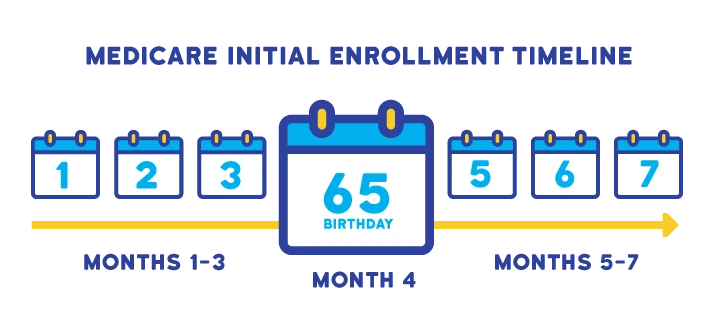
Your Initial Enrollment Period (IEP) is a seven-month window that includes:
- Three months before your birthday month
- Your birthday month
- Three months after your birthday month
Missing this enrollment period without qualifying for a Special Enrollment Period could result in late enrollment penalties and delayed coverage.
We’ll discuss enrollment periods in detail later in this guide.
Understanding Medicare Part A
Medicare Part A is commonly referred to as Hospital Insurance. It helps cover the costs associated with inpatient medical care and is typically premium-free for individuals who have worked and paid Medicare taxes long enough to qualify.
Although many people think Part A only covers hospital stays, it actually includes several important healthcare services
What Does Medicare Part A Cover?
Medicare Part A generally helps pay for:
- Inpatient hospital stays
- Skilled nursing facility care (following a qualifying hospital stay)
- Hospice care
- Limited home health care services
Coverage is based on medical necessity and specific Medicare guidelines.
For example, if you’re admitted to a hospital as an inpatient after surgery, Medicare Part A may help cover your room, meals, nursing care, medications administered during your stay, and other medically necessary services. If your physician determines that hospice care is appropriate, Part A may also cover pain management, counseling services, and supportive care designed to improve quality of life.
What Medicare Part A Does Not Cover
While Part A provides valuable protection against significant hospital expenses, it doesn’t cover every healthcare need.
Examples of services generally not covered include:
- Routine dental care
- Vision exams and eyeglasses
- Hearing aids
- Long-term custodial nursing home care
- Cosmetic procedures
- Most outpatient medical services
Because of these coverage gaps, many beneficiaries choose additional coverage through Medicare Part B, Medicare Part D, Medicare Supplement insurance, or Medicare Advantage plans.
Does Medicare Part A Have a Monthly Premium?
Many people qualify for premium-free Part A if they or their spouse worked and paid Medicare payroll taxes for at least 40 quarters (approximately 10 years).
If you don’t meet the required work history, you may still enroll in Part A by paying a monthly premium. Other costs may still apply, including deductibles and coinsurance for certain hospital stays or skilled nursing facility care. Understanding these potential expenses is an important part of choosing the Medicare coverage that’s right for you.
Why Part A Matters
Hospital care is often one of the largest healthcare expenses people face as they age. Having Medicare Part A can provide significant financial protection by helping cover many inpatient services that would otherwise result in substantial out-of-pocket costs.
However, because Part A doesn’t cover everything, it’s important to understand how it works alongside Medicare Part B and your other coverage options. Building the right combination of Medicare benefits can help ensure you’re protected not only during hospital stays but also for routine medical care, prescription drugs, and ongoing healthcare needs.
Coming Up Next: In Part 2, we’ll cover Medicare Part B (Medical Insurance), Medicare Part C (Medicare Advantage), Medicare Part D (Prescription Drug Plans), and Medicare Supplement (Medigap) coverage to help you understand how each option fits into your overall Medicare plan.
Understanding Medicare Part B
While Medicare Part A helps cover inpatient hospital care, Medicare Part B focuses on outpatient medical services and preventive healthcare. Together, Parts A and B make up Original Medicare, providing the foundation of Medicare coverage for millions of Americans.
Part B is designed to help you maintain your health by covering medically necessary services, routine doctor visits, preventive screenings, and outpatient treatments.
What Does Medicare Part B Cover?
Medicare Part B generally covers:
- Visits to primary care physicians and specialists
- Outpatient medical procedures
- Preventive services and annual wellness visits
- Diagnostic tests and laboratory work
- X-rays, MRIs, CT scans, and other imaging services
- Emergency room care (when not admitted as an inpatient)
- Mental health services
- Physical and occupational therapy
- Durable Medical Equipment (DME), such as wheelchairs, walkers, and oxygen equipment
- Certain home health services
Preventive care is one of Part B’s greatest benefits. Medicare covers many screenings and wellness services to help detect health conditions early, often before symptoms appear.
Examples include:
- Diabetes screenings
- Cardiovascular screenings
- Mammograms
- Colon cancer screenings
- Bone density tests
- Flu shots
- COVID-19 vaccinations (when applicable)
- Annual Wellness Visits
These preventive services can play a vital role in maintaining your health and reducing future healthcare costs.
What Does Part B Cost?
Unlike Part A, most Medicare beneficiaries pay a monthly premium for Part B.
In addition to the monthly premium, beneficiaries are generally responsible for:
- An annual deductible
- Coinsurance for many covered services
- Costs for services not covered by Medicare
Your monthly premium may be higher if your income exceeds certain thresholds due to the Income-Related Monthly Adjustment Amount (IRMAA), which we’ll discuss later in this guide.
Why Is Part B Important?
Many people think of Medicare as hospital insurance, but the reality is that most healthcare occurs outside of a hospital. Routine physician visits, preventive screenings, diagnostic testing, and outpatient treatments all fall under Medicare Part B.
Without Part B, beneficiaries could face substantial out-of-pocket costs for everyday medical care.
What Medicare Part C (Medicare Advantage) Cover?
- Medicare Part A coverage
- Medicare Part B coverage
- Prescription drug coverage (Part D) in many plans
- Additional benefits
Understanding Medicare Part C (Medicare Advantage)
Medicare Part C, more commonly known as Medicare Advantage, offers an alternative way to receive your Medicare benefits.
Instead of receiving your coverage directly through Original Medicare, Medicare Advantage plans are offered by private insurance companies approved by Medicare. These plans are required to provide at least the same level of coverage as Original Medicare and often include additional benefits that Original Medicare does not.
Because of their bundled approach, Medicare Advantage plans have become an increasingly popular choice for Medicare beneficiaries.
What Does Medicare Advantage Cover?
Most Medicare Advantage plans include:
- Medicare Part A coverage
- Medicare Part B coverage
- Prescription drug coverage (Part D) in many plans
- Extra Benefits
Since benefits vary by insurance carrier and geographic area, reviewing plan details each year is essential.
Provider Networks
Unlike Original Medicare, many Medicare Advantage plans operate using provider networks.
Common network types include:
- HMO (Health Maintenance Organization)
- PPO (Preferred Provider Organization)
Depending on the plan, you may need to:
- Choose a primary care physician
- Obtain referrals for specialists
- Stay within the plan’s provider network to receive the lowest costs
Individuals who travel frequently or want unrestricted access to providers nationwide should carefully compare network requirements before enrolling.
Maximum Out-of-Pocket Protection
One significant advantage of Medicare Advantage is the annual Maximum Out-of-Pocket (MOOP) limit. Once you reach your plan’s maximum out-of-pocket limit for covered medical expenses during the year, the plan generally pays 100% of covered services for the remainder of that year. Original Medicare does not have a built-in annual out-of-pocket maximum, which is one reason some beneficiaries choose Medicare Advantage or Medigap coverage.
Is Medicare Advantage Right for Everyone?
Not necessarily.
Some people appreciate the convenience of having additional benefits combined into one plan with predictable costs. Others prefer the flexibility of Original Medicare paired with a Medicare Supplement policy that allows access to providers nationwide. The right choice depends on your healthcare needs, prescription medications, travel habits, preferred physicians, and financial goals.
Understanding Medicare Part D (Prescription Drug Plans)
Prescription medications are a significant healthcare expense for many Medicare beneficiaries.
That’s where Medicare Part D comes in.
Part D provides outpatient prescription drug coverage through private insurance companies that are approved by Medicare.
Even if you currently take few or no prescription medications, it’s important to consider enrolling in a Part D plan when you’re first eligible if you don’t have creditable prescription drug coverage (coverage that is expected to pay, on average, at least as much as Medicare’s standard prescription drug coverage).
If you go 63 consecutive days or more without Medicare Part D or other creditable prescription drug coverage after your Initial Enrollment Period ends, you may be subject to a Medicare Part D late enrollment penalty if you enroll later. In most cases, this penalty is added to your monthly Part D premium for as long as you have Medicare prescription drug coverage.
Because the penalty can have long-term financial implications, reviewing your prescription drug coverage options when you first become eligible for Medicare is an important step.
What Does Part D Cover?
Every Medicare Part D plan has a list of covered medications known as a formulary.
Prescription drugs are generally grouped into pricing tiers, such as:
- Tier 1 – Preferred Generic Drugs
- Tier 2 – Generic Drugs
- Tier 3 – Preferred Brand-Name Drugs
- Tier 4 – Non-Preferred Brand Drugs
- Tier 5 – Specialty Medications
Generally, medications in lower tiers have lower out-of-pocket costs than those in higher tiers.
Each insurance company maintains its own formulary, which means two Part D plans may cover the same medication differently or place it in different pricing tiers. Reviewing a plan’s formulary before enrolling can help ensure your prescriptions are covered at a cost that fits your budget.
Pharmacy Networks
Most Medicare Part D plans also have preferred pharmacy networks.
Using a preferred network pharmacy can often lower your prescription costs compared to using a standard or out-of-network pharmacy.
Before choosing a Part D plan, it’s a good idea to verify:
- Your prescription medications are included in the plan’s formulary.
- Your preferred pharmacy participates in the plan’s network.
- Your estimated annual prescription drug costs, including premiums, deductibles, copayments, and coinsurance.
Comparing plans each year can help ensure your coverage continues to meet your healthcare needs, especially if your medications or pharmacy preferences change.
Why Reviewing Your Plan Each Year Matters
Prescription drug plans can change annually.
Changes may include:
- Monthly premiums
- Covered medications
- Pharmacy networks
- Drug pricing tiers
Reviewing your plan during Medicare’s Annual Enrollment Period helps ensure you’re still receiving the best value based on your current medications.
Understanding Medicare Supplement Insurance (Medigap)
Original Medicare provides valuable health coverage, but it doesn’t pay for every healthcare expense.
That’s where Medicare Supplement Insurance, commonly called Medigap, comes in.
Medigap policies are offered by private insurance companies and are designed to help pay certain out-of-pocket costs that Original Medicare leaves behind.
These costs may include:
- Deductibles
- Coinsurance
- Copayments
- Certain excess charges (depending on the plan)
A Medigap policy works alongside Original Medicare—it does not replace it.
How Medigap Works
With Medigap, Medicare generally pays its portion of approved healthcare expenses first.
Your Medigap policy then helps cover some or all of the remaining eligible costs, depending on the specific plan you choose. This can significantly reduce unexpected medical bills and provide more predictable healthcare expenses throughout the year.
Standardized Plans
One unique feature of Medigap is that plans are standardized in most states. That means a Plan G from one insurance company provides the same basic benefits as a Plan G from another company.
The primary differences are usually:
- Monthly premium
- Customer service
- Financial stability of the insurance company
- Rate history
This standardization makes comparing plans much easier than comparing many other types of health insurance.
Benefits of Medigap
Many Medicare beneficiaries choose Medigap because it offers:
- Greater provider flexibility
- No network restrictions when seeing providers who accept Medicare
- Generally no referrals to see specialists
- Typically no prior authorizations for Medicare-covered services
- Lower out-of-pocket medical expenses for covered services
- More predictable healthcare costs
- Nationwide access to providers who accept Medicare
This flexibility makes Medigap especially attractive for retirees who travel frequently, spend time living in multiple states throughout the year, or simply want the freedom to choose their healthcare providers without network limitations.
Things to Consider
Medigap plans generally:
- Do not include prescription drug coverage
- Require enrollment in both Medicare Part A and Part B
- Have separate monthly premiums in addition to your Part B premium
Because Medigap policies don’t include prescription drug coverage, many beneficiaries purchase a standalone Medicare Part D plan to complete their coverage.
By now, you should have a solid understanding of the four parts of Medicare and how Medigap complements Original Medicare. In the next section, we’ll compare Medicare Advantage vs. Medicare Supplement, explain Medicare enrollment periods, discuss IRMAA and Medicare costs, review late enrollment penalties, highlight common mistakes to avoid, and answer some of the most frequently asked Medicare questions.
Medicare Advantage vs. Medicare Supplement (Medigap)
One of the biggest decisions Medicare beneficiaries face is whether to enroll in a Medicare Advantage (Part C) plan or pair Original Medicare with a Medicare Supplement (Medigap) policy. While both options can help manage healthcare costs, they work very differently and are designed for different lifestyles and healthcare needs.
There is no one-size-fits-all solution. The best choice depends on factors such as your budget, health conditions, preferred doctors, travel habits, and how much flexibility you want when receiving care.
Medicare Advantage vs. Medigap Comparison
| Feature | Medicare Advantage | Medicare Supplement (Medigap) |
| Offered By | Private insurance companies | Private insurance companies |
| Works With | Replaces Original Medicare | Works alongside Original Medicare |
| Monthly Premium | Often lower | Typically higher |
| Provider Networks | Usually HMO or PPO | Any provider that accepts Medicare |
| Referrals | May be required | Generally not required |
| Prior Authorizations | Often required for certain services | Typically not required for Medicare-covered services |
| Prescription Drug Coverage | Often included | Requires a separate Part D plan |
| Out-of-Pocket Costs | Annual maximum out-of-pocket limit applies | Generally lower out-of-pocket costs for Medicare-covered services |
Note: While Medigap plans generally don’t require referrals or prior authorizations, coverage decisions remain subject to Medicare rules and the terms of the policy.
Medicare Advantage May Be a Good Fit If You:
- Prefer an all-in-one plan.
- Want additional benefits.
- Are comfortable using provider networks.
- Want an annual maximum out-of-pocket limit.
Medigap May Be a Good Fit If You:
- Want the freedom to see any provider who accepts Medicare.
- Travel frequently within the United States.
- Prefer more predictable healthcare expenses.
- Are willing to pay a higher monthly premium in exchange for lower out-of-pocket costs.
Ultimately, reviewing your healthcare needs with a licensed Medicare advisor can help you determine which option best aligns with your circumstances.
Medicare Enrollment Periods
Enrolling in Medicare at the right time is critical. Missing important deadlines can result in delayed coverage or permanent late enrollment penalties.
Initial Enrollment Period (IEP)
Your Initial Enrollment Period is a seven-month window that begins:
- Three months before your 65th birthday month
- Includes your birthday month
- Ends three months after your birthday month
This is when most people first enroll in Medicare.
Annual Enrollment Period (AEP)
The Annual Enrollment Period, which runs each fall, allows beneficiaries to:
- Switch Medicare Advantage plans
- Return to Original Medicare
- Join or change a Medicare Part D prescription drug plan
Reviewing your coverage annually is important because premiums, provider networks, prescription drug formularies, and plan benefits can change from year to year.
Medicare Advantage Open Enrollment Period
If you’re already enrolled in a Medicare Advantage plan, this enrollment period gives you an opportunity to:
- Switch to another Medicare Advantage plan.
- Return to Original Medicare (and, if eligible, enroll in a Part D plan).
Special Enrollment Periods (SEPs)
Certain life events may qualify you for a Special Enrollment Period, allowing you to make Medicare changes outside of the standard enrollment windows.
Examples include:
- Losing employer-sponsored health coverage.
- Moving outside your current plan’s service area.
- Qualifying for certain financial assistance programs.
- Other qualifying circumstances recognized by Medicare.
Graphic Placeholder: Medicare Enrollment Timeline.
What Is IRMAA?
The Income-Related Monthly Adjustment Amount (IRMAA) is an additional charge that some higher-income Medicare beneficiaries pay for Medicare Part B and, in many cases, Medicare Part D.
IRMAA is based on your reported income from prior tax years. If your income exceeds certain thresholds established by Medicare, your monthly premiums may be higher. Life events such as retirement, marriage, divorce, or the death of a spouse may affect your income. In some situations, beneficiaries may request a review if they believe their current income no longer reflects the amount used to calculate IRMAA.
Understanding how IRMAA works can help you avoid unexpected premium increases and better plan for retirement healthcare costs.
Medicare Costs in 2026
The overall cost of Medicare depends on several factors, including:
- The plans you choose.
- Your income.
- Whether you purchase supplemental coverage.
- Your healthcare usage throughout the year.
Potential Medicare expenses include:
- Monthly premiums
- Annual deductibles
- Copayments
- Coinsurance
- Prescription drug costs
- Out-of-pocket medical expenses
While Original Medicare provides valuable protection, it doesn’t cover every expense. That’s why many beneficiaries choose either a Medicare Advantage plan or a Medigap policy to help manage costs.
Note: Medicare premiums, deductibles, and cost-sharing amounts are updated periodically. Always review the latest Medicare information or speak with a licensed advisor before making enrollment decisions.
Late Enrollment Penalties
One of the most common—and costly—mistakes Medicare beneficiaries make is delaying enrollment without having other qualifying coverage.
Depending on your circumstances, you may face penalties for enrolling late in certain parts of Medicare.
Part B Late Enrollment Penalty
If you delay enrolling in Medicare Part B without qualifying for a Special Enrollment Period, your monthly premium may increase. In many cases, this higher premium continues for as long as you have Part B coverage.
Part D Late Enrollment Penalty
If you go for an extended period without creditable prescription drug coverage after becoming eligible, you may also incur a Part D late enrollment penalty. This penalty is generally added to your monthly Part D premium. Because these penalties can be long-lasting, it’s important to understand your enrollment timeline and evaluate your coverage options before delaying Medicare.
Common Medicare Mistakes
Even with careful planning, Medicare can be confusing. Here are some of the most common mistakes to avoid:
Missing Enrollment Deadlines
Waiting too long to enroll may lead to penalties or gaps in coverage.
Assuming Medicare Covers Everything
Original Medicare does not cover every healthcare expense. Services such as routine dental care, vision care, hearing aids, and many prescription drugs require additional coverage.
Choosing a Plan Based Only on Monthly Premiums
A lower premium doesn’t always mean lower overall healthcare costs. Consider deductibles, copayments, provider networks, and prescription drug coverage when comparing plans.
Not Reviewing Coverage Each Year
Healthcare needs change, and so do Medicare plans. Reviewing your coverage annually can help ensure your plan still meets your needs.
Ignoring Prescription Drug Coverage
Even if you don’t currently take medications, enrolling in a Part D plan when you’re first eligible may help you avoid future penalties.
Frequently Asked Questions
Is Medicare free?
While many people qualify for premium-free Medicare Part A, most beneficiaries pay a monthly premium for Medicare Part B. Additional costs may apply depending on the coverage you choose.
What’s the difference between Medicare and Medicaid?
Medicare is a federal health insurance program primarily for people age 65 and older or those with certain disabilities. Medicaid is a joint federal and state program that helps provide healthcare coverage for eligible individuals with limited income and resources.
Can I work and still enroll in Medicare?
Yes. Many people continue working after becoming eligible for Medicare.
Some individuals choose to replace their employer group health coverage with Medicare while continuing to work, while others may keep their employer-sponsored coverage or coordinate it with Medicare, depending on their situation.
The best choice depends on factors such as your employer’s health plan, the size of your employer, your healthcare needs, and the costs associated with each coverage option. We recommend reviewing your employer coverage and Medicare options with a licensed Medicare advisor to determine which solution is best for your specific needs.
Does Medicare cover dental and vision?
Original Medicare generally does not cover routine dental or vision care. Many Medicare Advantage plans offer these benefits, and separate insurance policies may also be be available.
Can I change my Medicare plan later?
It depends on the type of Medicare coverage you have.
Many Medicare beneficiaries can make changes to their coverage during Medicare’s designated enrollment periods. However, if you’re enrolled in a Medicare Supplement (Medigap) plan, changing to a different Medigap policy may require medical underwriting, depending on your state, timing, and eligibility. Because the rules can vary, it’s important to review your options before making a change.
Do I need a Part D plan if I don’t take medications?
Even if you don’t currently take prescription medications, enrolling in a Medicare Part D plan when you’re first eligible may help you avoid a future late enrollment penalty if you go 63 consecutive days or more without Medicare prescription drug coverage or other creditable prescription drug coverage. In most cases, the Part D late enrollment penalty is added to your monthly premium for as long as you have Medicare prescription drug coverage.
Final Thoughts
Medicare plays a vital role in helping millions of Americans access affordable healthcare during retirement. However, understanding your options before enrolling can make a significant difference in both your healthcare experience and your long-term financial well-being.
Whether you’re approaching your 65th birthday, retiring from the workforce, or helping a loved one navigate Medicare, taking the time to understand the different parts of Medicare, enrollment periods, coverage options, and potential costs can help you make more informed decisions. Because Medicare plans, benefits, provider networks, and costs can change from year to year, reviewing your coverage annually is one of the best ways to ensure it continues to meet your healthcare needs.
Need Help Choosing the Right Medicare Plan?
Navigating Medicare can feel overwhelming, but you don’t have to do it alone.
Whether you’re enrolling for the first time, comparing Medicare Advantage and Medicare Supplement plans, or reviewing your current coverage, our experienced team is here to help you understand your options and make confident, informed decisions.
Contact us today to schedule a free, no-obligation Medicare consultation and receive personalized guidance based on your healthcare needs, budget, and retirement goals.
Helpful Resources
For official Medicare information, visit:
- Medicare.gov
- Centers for Medicare & Medicaid Services (CMS.gov)
- Social Security Administration (SSA.gov)
These trusted government resources provide up-to-date information on Medicare eligibility, enrollment, and benefits.
Continue Reading
Explore our other educational guides:
- Long-Term Care Planning: Protecting Your Retirement from Healthcare Costs
- Advanced Life Insurance Strategies for Families & Business Owners
- The Ultimate Guide to Life Insurance: Choosing the Right Policy for Every Stage of Life
- Medicare Supplement vs. Medicare Advantage: Which Is Right for You?
- The Complete Guide to Individual & Family Health Insurance (ACA)